Floating solar
Guide · 2020
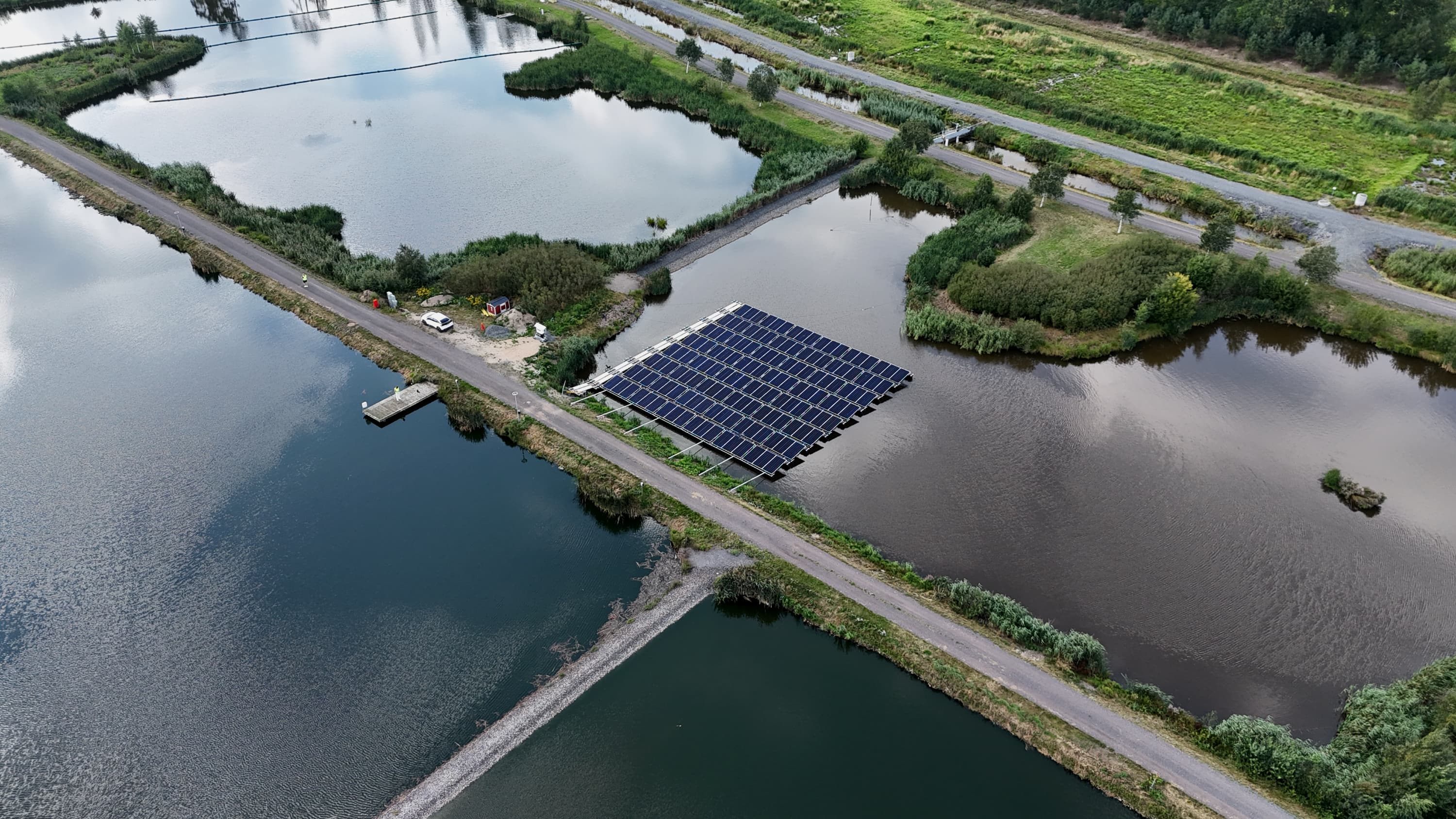
Floating solar panels are solar modules installed on a water surface instead of on land or a roof. This guide explains how the technology works, its benefits and drawbacks, and where it fits best.
What is floating solar?
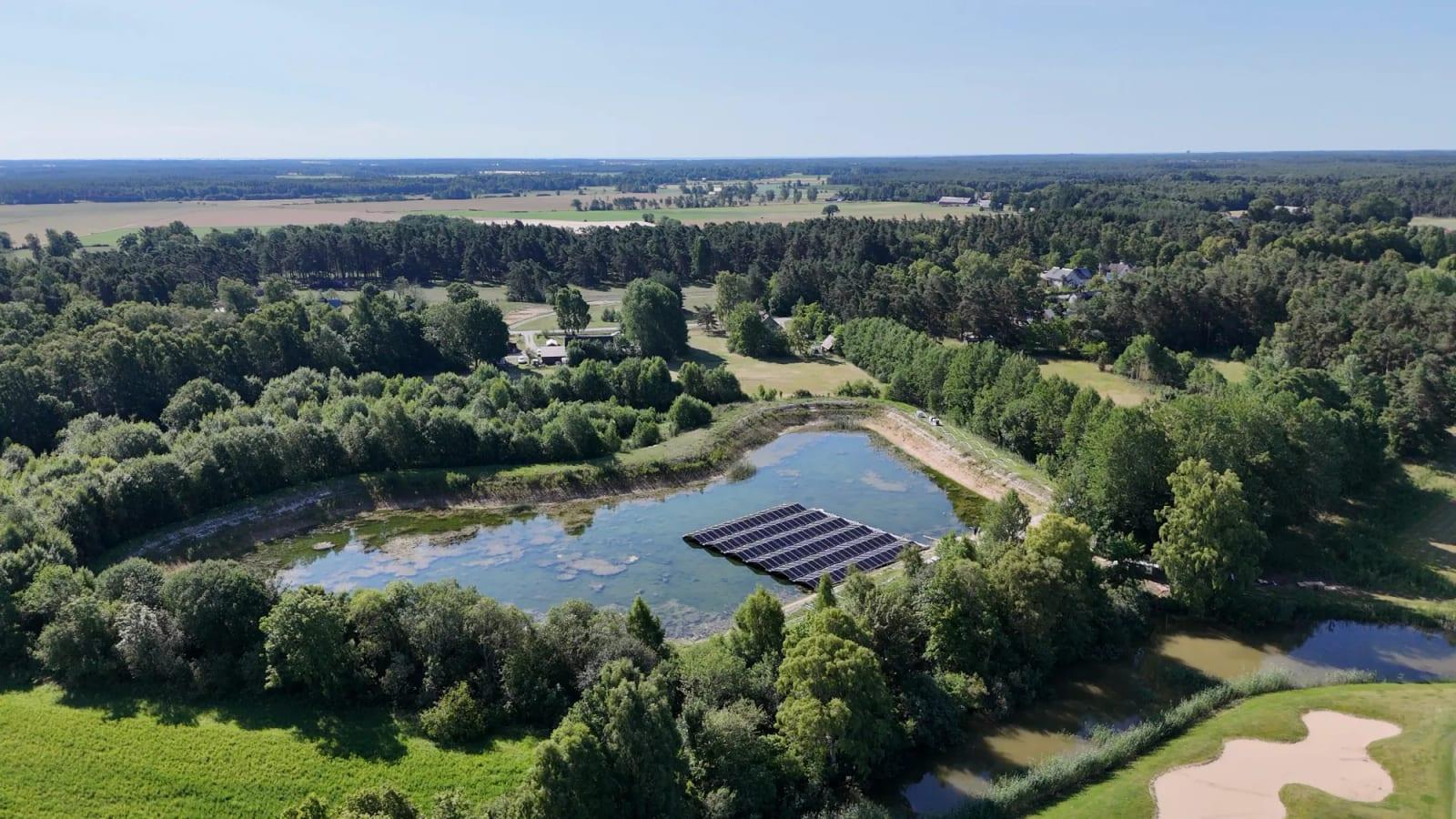
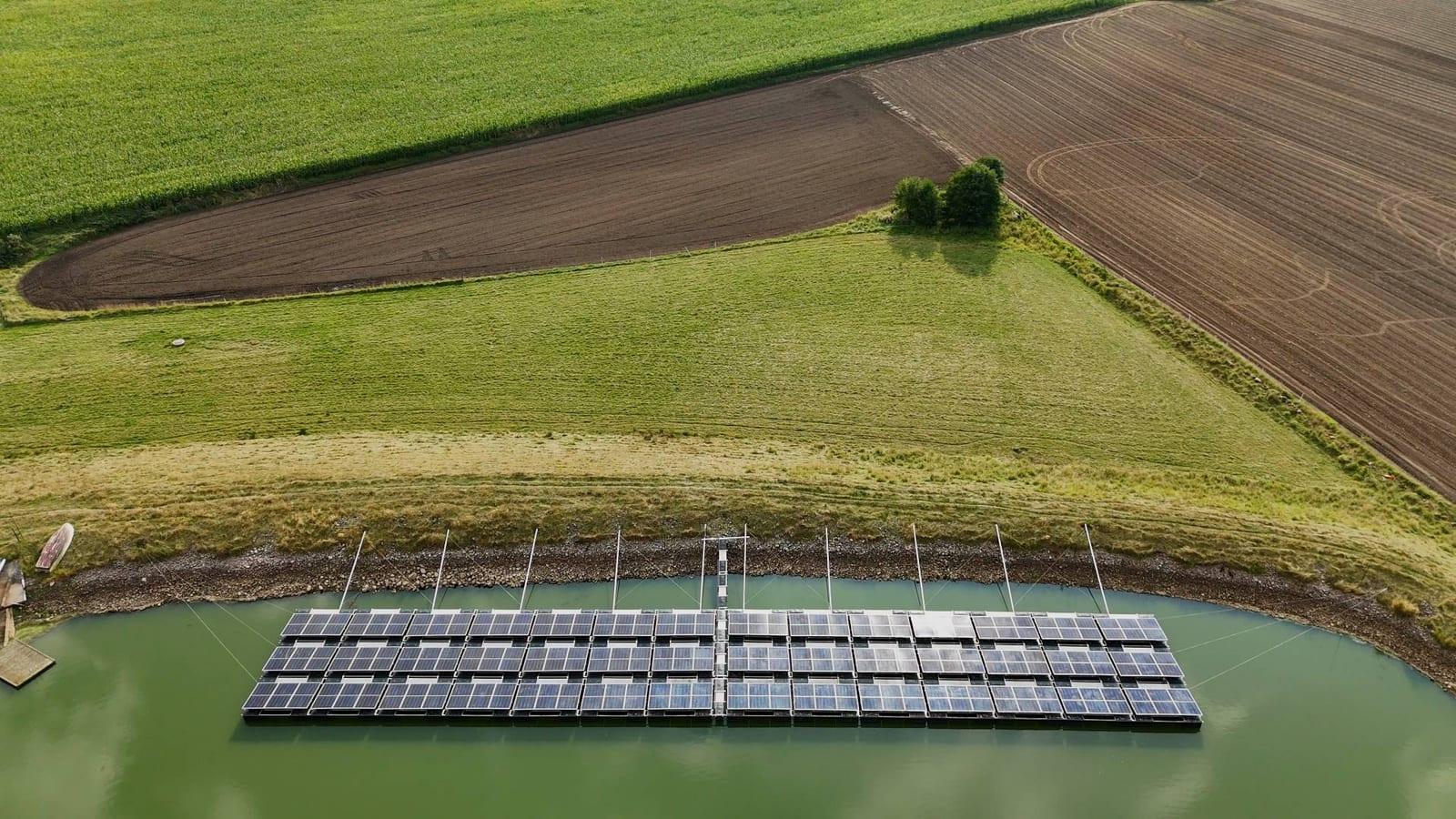
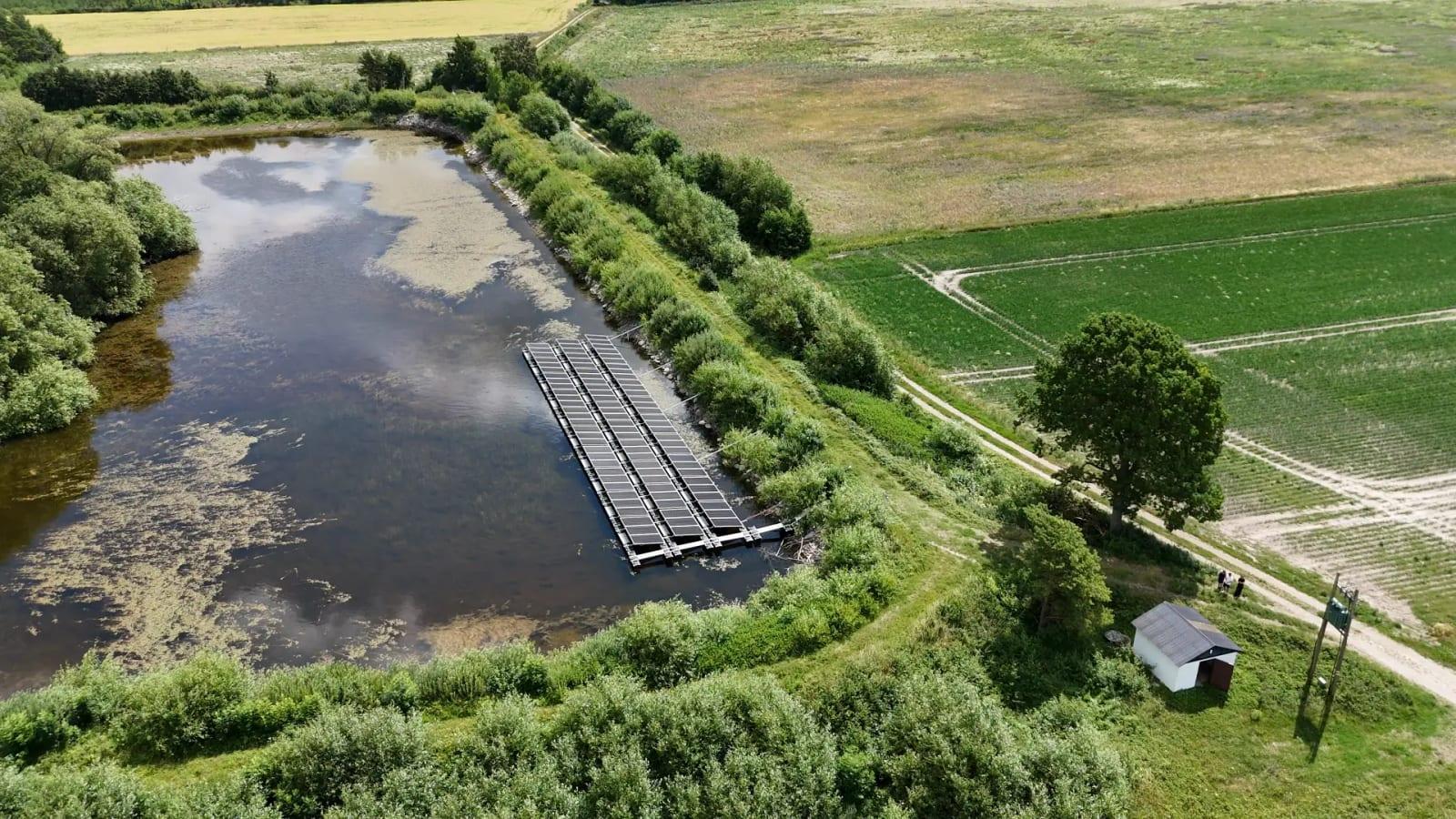
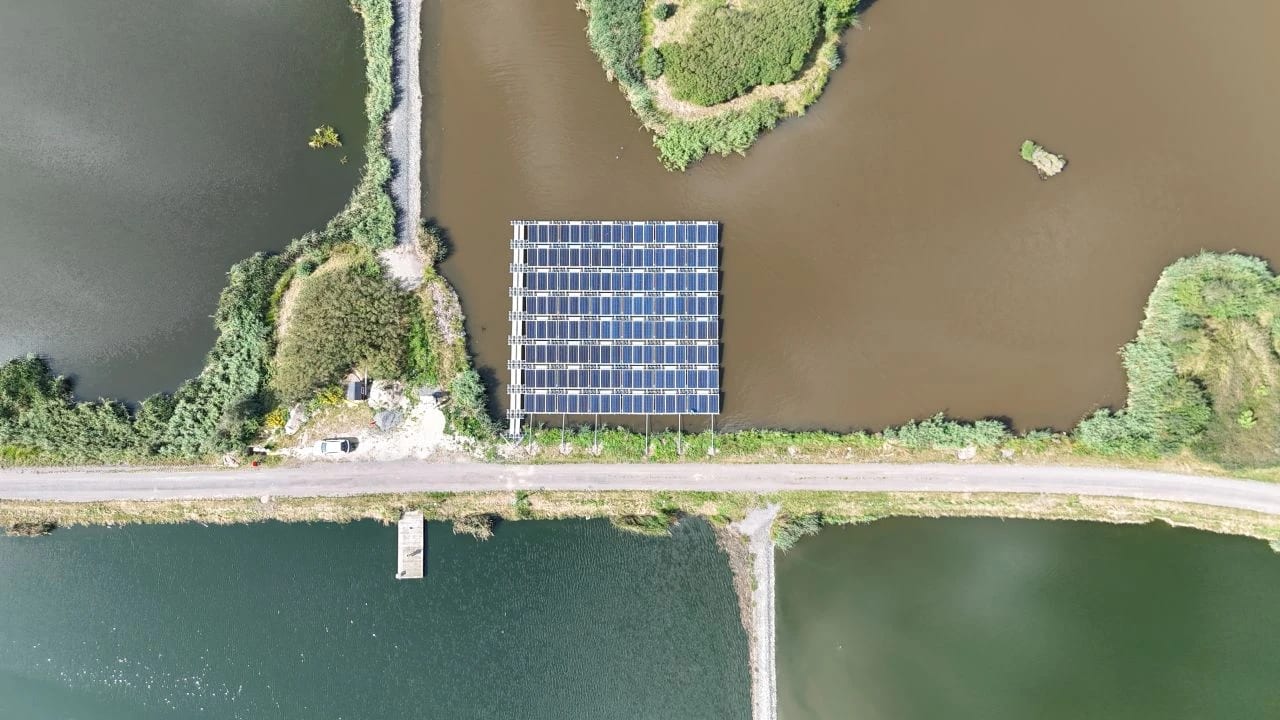
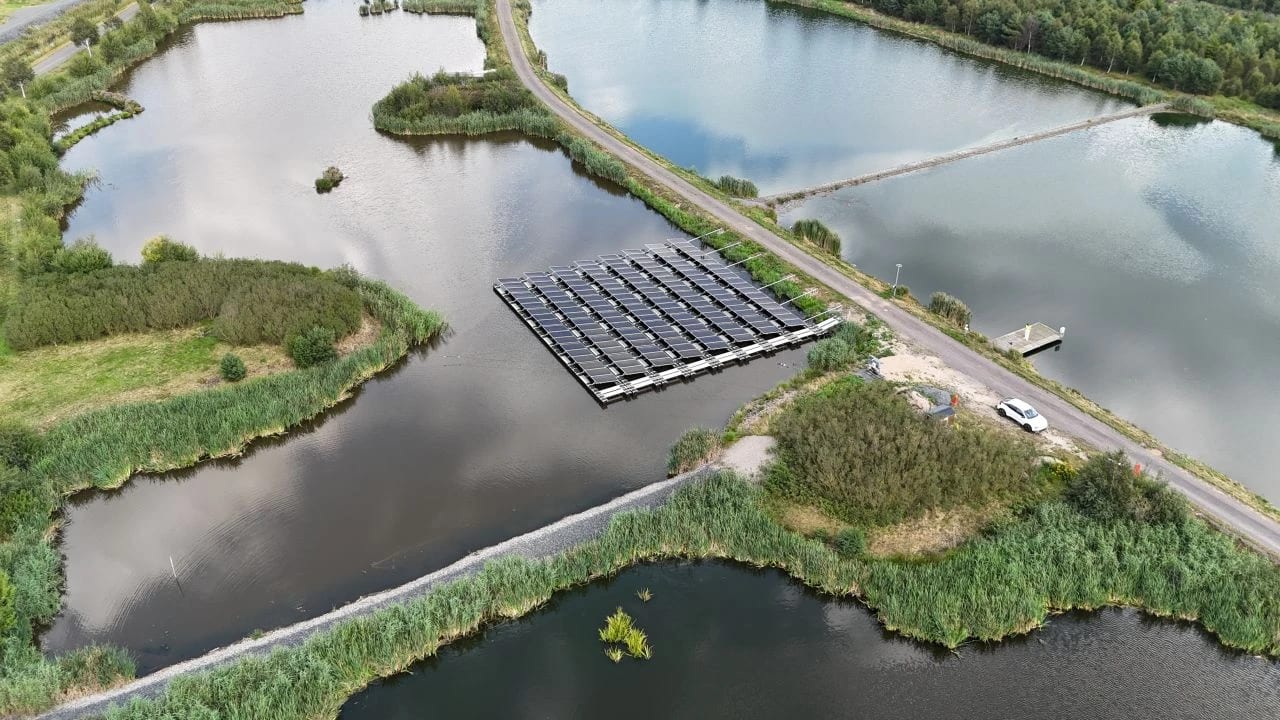
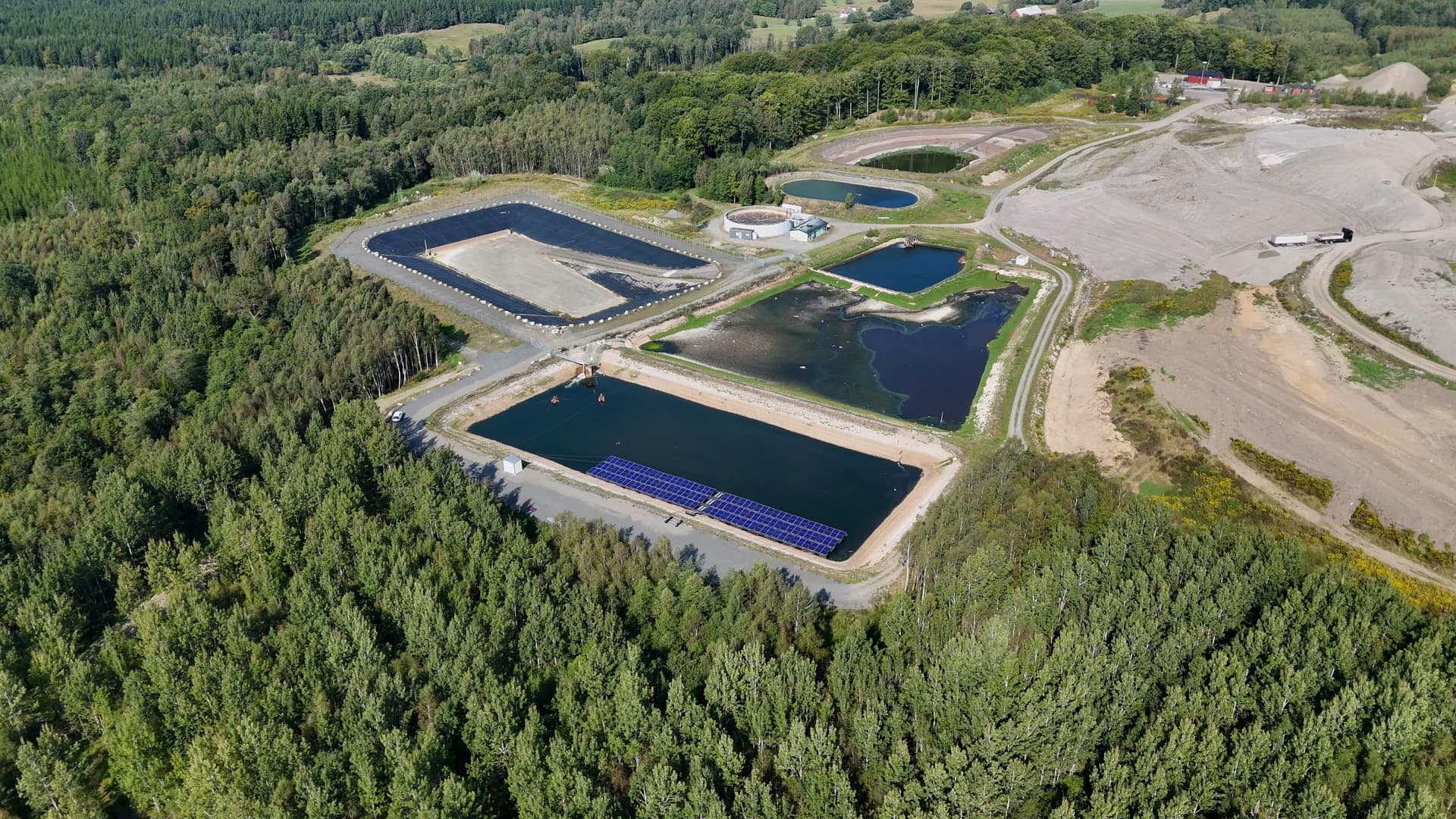
Floating solar converts sunlight into electricity in the same way as conventional solar panels. The difference is that the panels sit on floating platforms on the water. The technology is mainly used on man-made water surfaces such as irrigation ponds, industrial ponds, leachate ponds and reservoirs.
Because the installation sits on water, it does not take up any land. The water also cools the panels, which can give up to 15 % higher efficiency than rooftop or ground-mounted systems.
How does floating solar work?
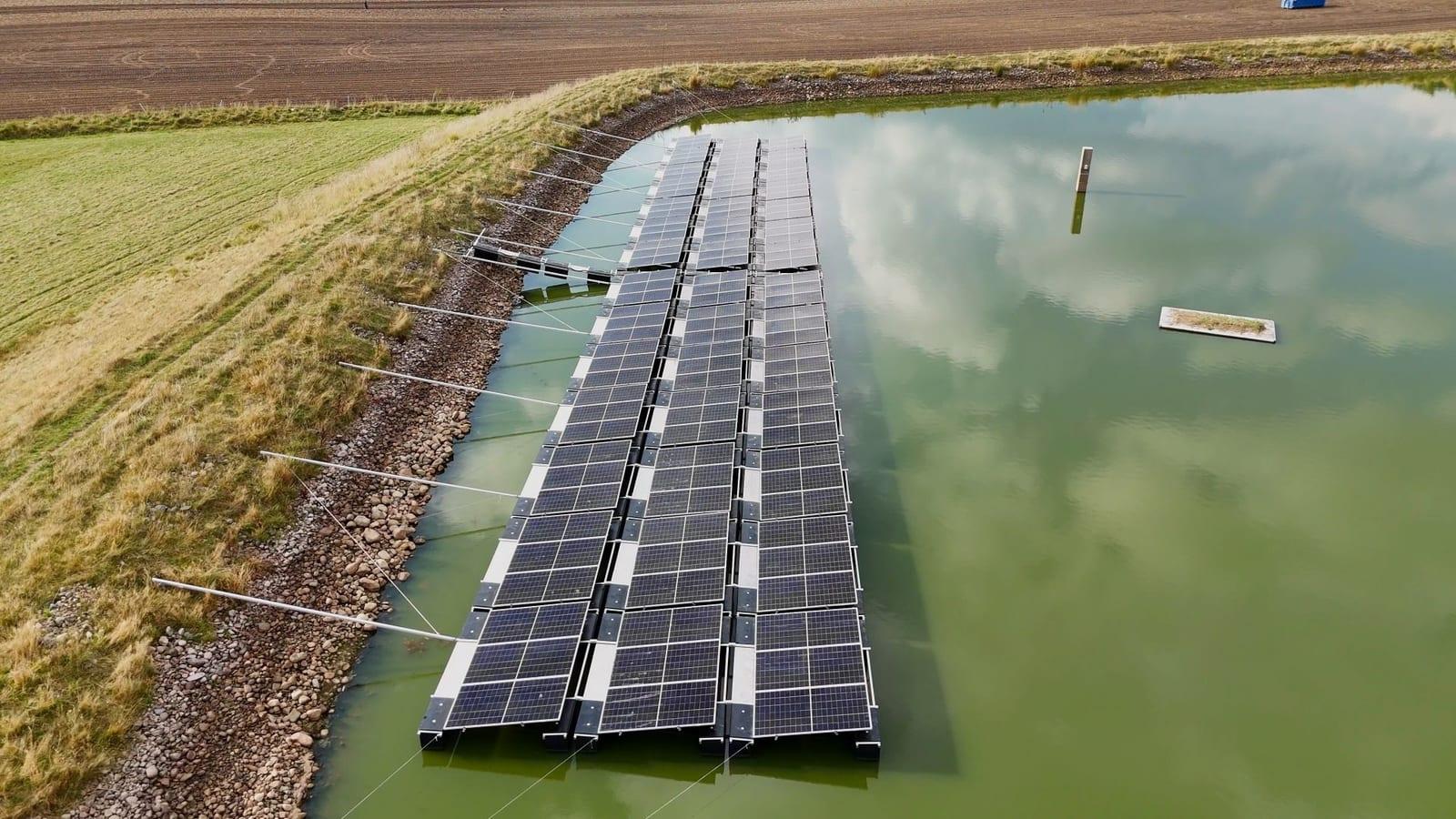
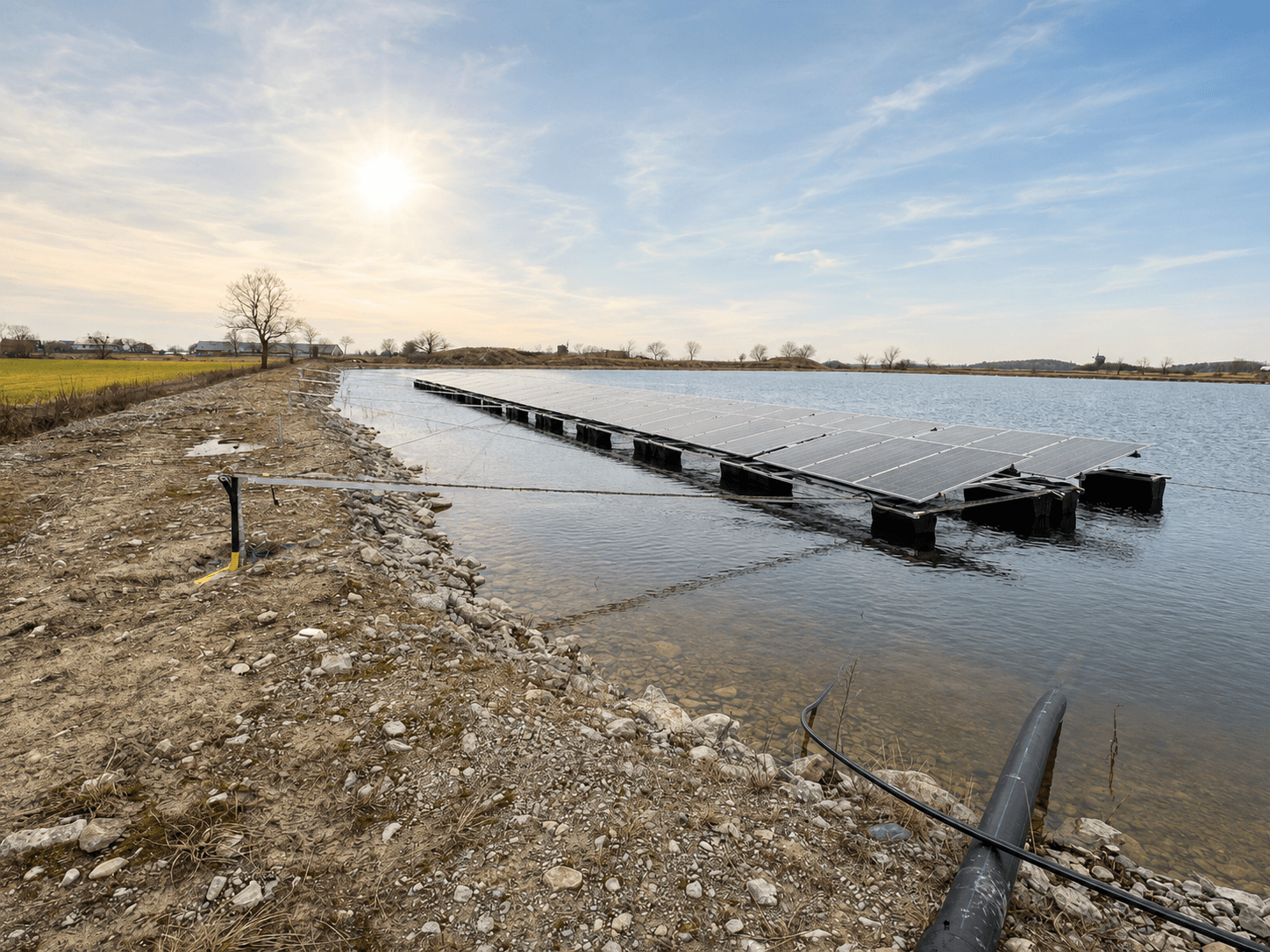
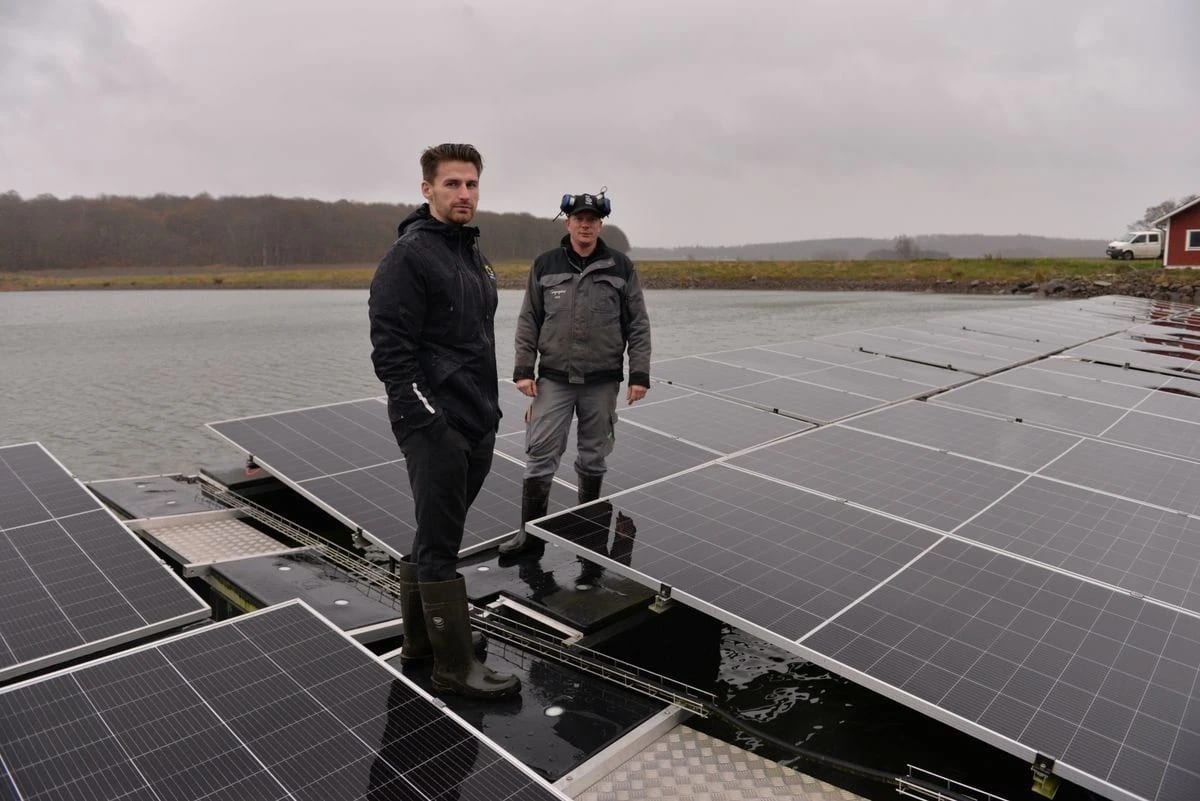
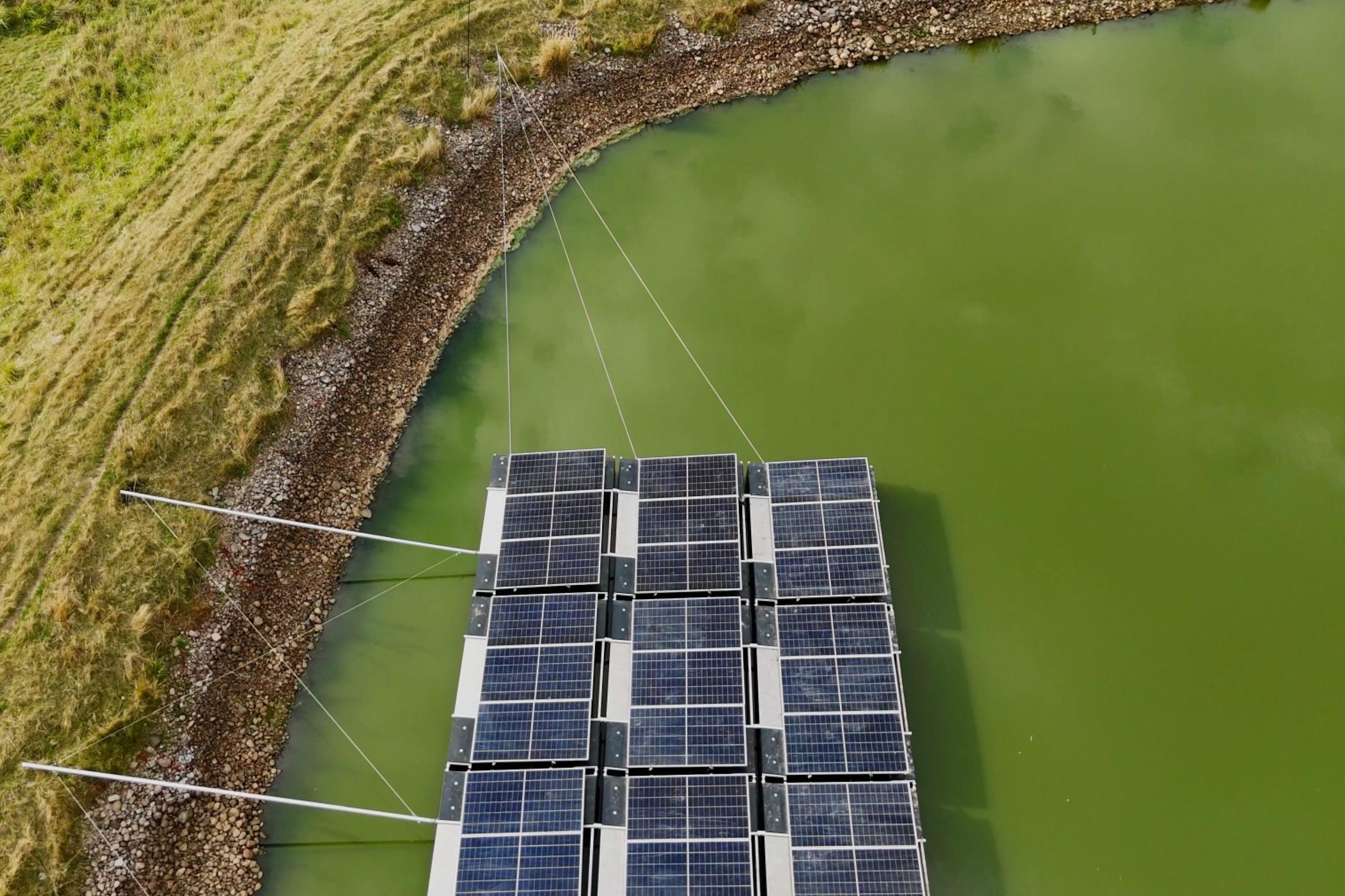
The panels are mounted on floating platforms, often plastic pontoons carrying a metal frame. The platforms are connected into one installation that is anchored to the shore or the bottom. The anchoring has to keep the installation in place while following the water as the level rises or falls.
When sunlight hits the panels, electricity is generated and carried ashore in cables. There it is connected to an inverter and on to the business, a substation or the grid. Because the installation is built from modules, it can be adapted to the shape and size of the water surface, from smaller installations to solar parks of several MW.
Why does floating solar produce more electricity?
Solar panels lose efficiency when they get hot. On the water the panels stay cooler, so they keep a higher efficiency even on warm summer days. With bifacial panels, light reflected from the water surface can also add to production. Taken together, a floating installation can produce more electricity per installed kWp than a comparable installation on land.
Benefits of floating solar
Water surfaces that would otherwise sit unused
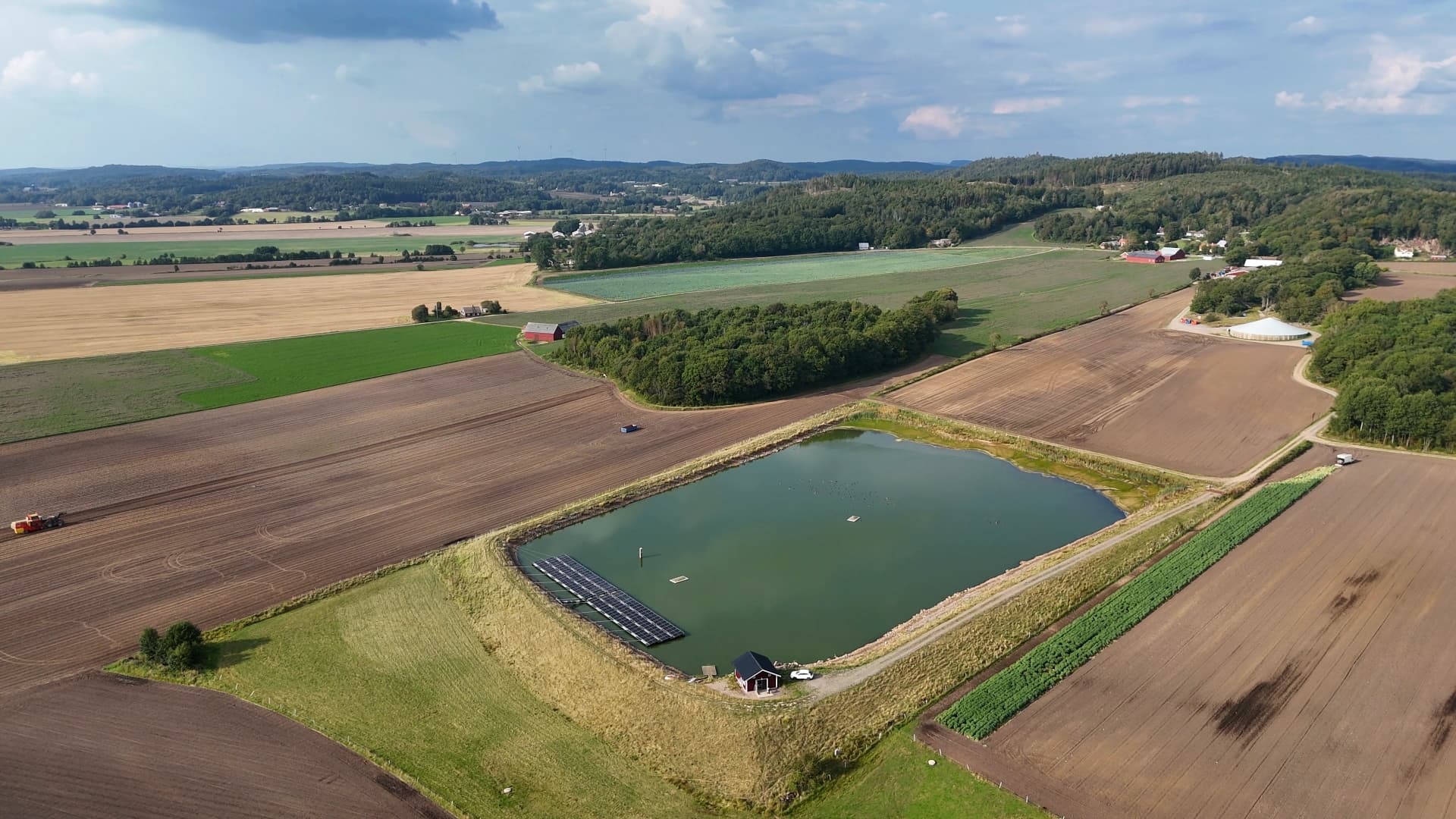
Floating solar is built on water surfaces that already exist and are usually already used for something else. This frees up land for farming, buildings and nature, which is especially valuable where land is expensive or scarce. A floating solar park can deliver 1.7–2 MW per hectare.
Higher electricity production
The cooling from the water can give up to 15 % higher efficiency than rooftop or ground-mounted systems, and the effect is greatest when it is warm and the sun is high.
Benefits for water and the environment
The panels shade the water, which lowers its temperature and slows algal growth. That means cleaner water and a lower risk of eutrophication. Evaporation is also reduced, by up to 2,740 m³ of water per covered hectare per year, which is valuable for irrigation ponds and during dry periods. Placing the panels on water also reduces the fire risk compared with solar close to buildings and other infrastructure.
Drawbacks of floating solar
Anchoring affects the cost
The floating platform and the anchoring are part of the project cost that solar on land does not have. How extensive the anchoring needs to be depends on the size and depth of the water surface, waves and changes in water level. Choosing a suitable surface and adapting the anchoring to the site makes the installation more cost-effective.
A suitable water surface is required
Floating solar requires a water surface of the right size, depth and water levels, with the possibility of connecting to the grid. The technology is therefore best suited to businesses with ponds or reservoirs, such as farms, industries and waste facilities, rather than individual households.
Floating solar in a Nordic climate
In the Nordic countries, water surfaces freeze in winter, and snow, ice and wind put high demands on the structure. An installation built for Swedish conditions needs to be dimensioned for snow and ice loads and have anchoring that withstands both ice and changing water levels. Sunsurf Solar's systems, for example, are dimensioned according to Eurocode and DNV's guideline for floating solar and withstand snow loads of up to 2.5 kN/m².
Floating solar in Sweden
Floating solar is still relatively new in Sweden, but the number of installations is growing. Sweden's largest floating solar installation was commissioned at Miljöhantering i Jönköping in 2025. Other examples include Halland's first floating installation at Tångagård, Gotland's first at Sallmunds Gård, Öland's first at Alböke Gård, an installation on the leachate pond at Nårab in Klippan and Sweden's largest floating solar installation on a golf course to date, at Gumbalde Resort.
About Sunsurf Solar
Sunsurf Solar is a Swedish developer of floating and pile-free solar systems and is behind the installations above. If you want to know whether your water surface is suitable for floating solar, or how you can get solar power in other ways, we are happy to help.