
Sustainability at Sunsurf Solar
Sustainability in solar — materials, lifespan and climate impact
Sunsurf Solar is a Swedish developer of floating and pile-free solar systems, founded in Gothenburg in 2020. A 100 kWp installation avoids around 16 tonnes of CO₂-equivalents a year; Sweden's largest floating solar park (116.1 kWp at Jönköping, 2025) avoids about 21 tonnes a year. The mounting system has a 40-year technical service life and is fully recyclable.
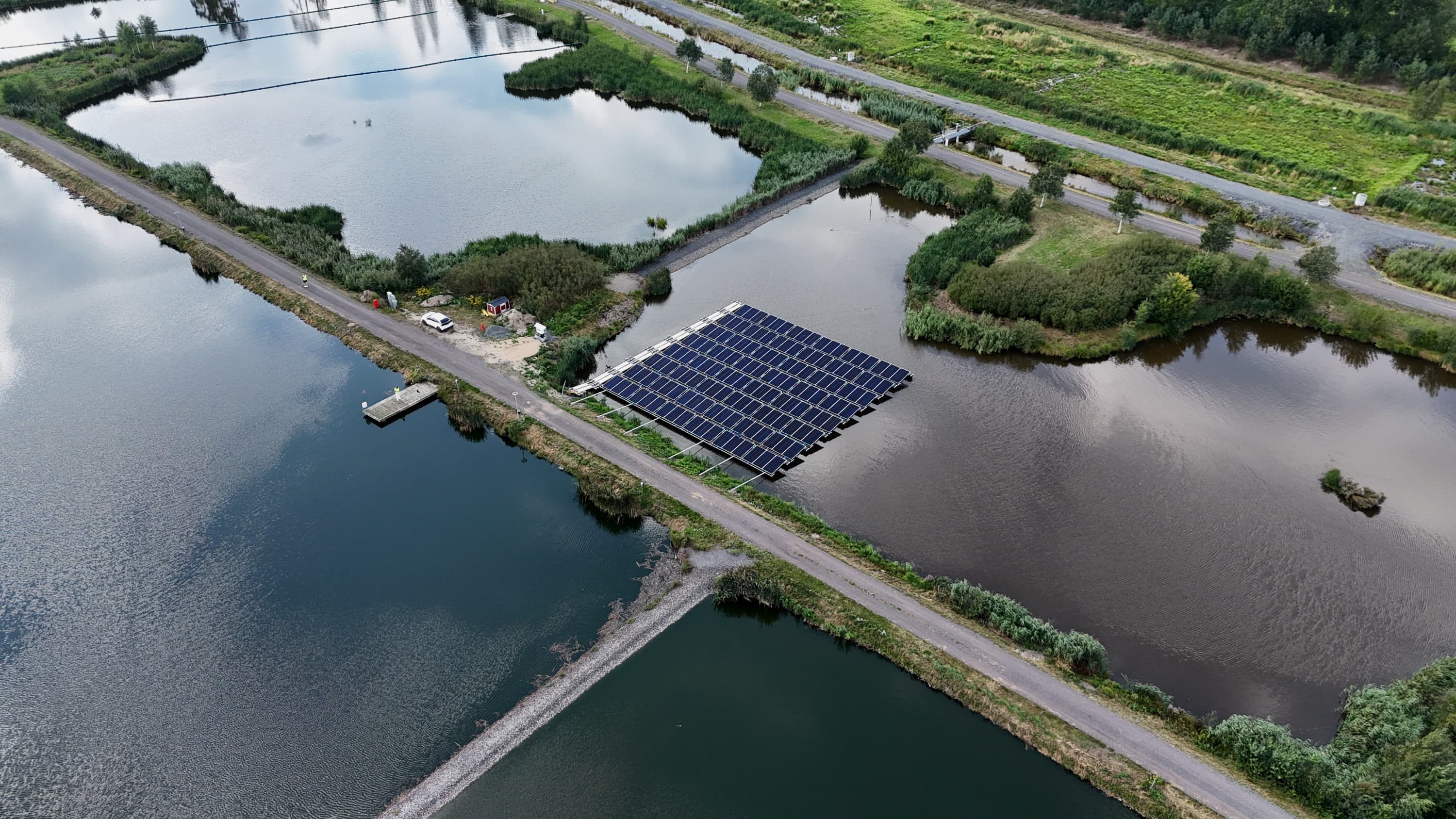
Sustainability in motion
Clean electricity on surfaces that would otherwise sit unused
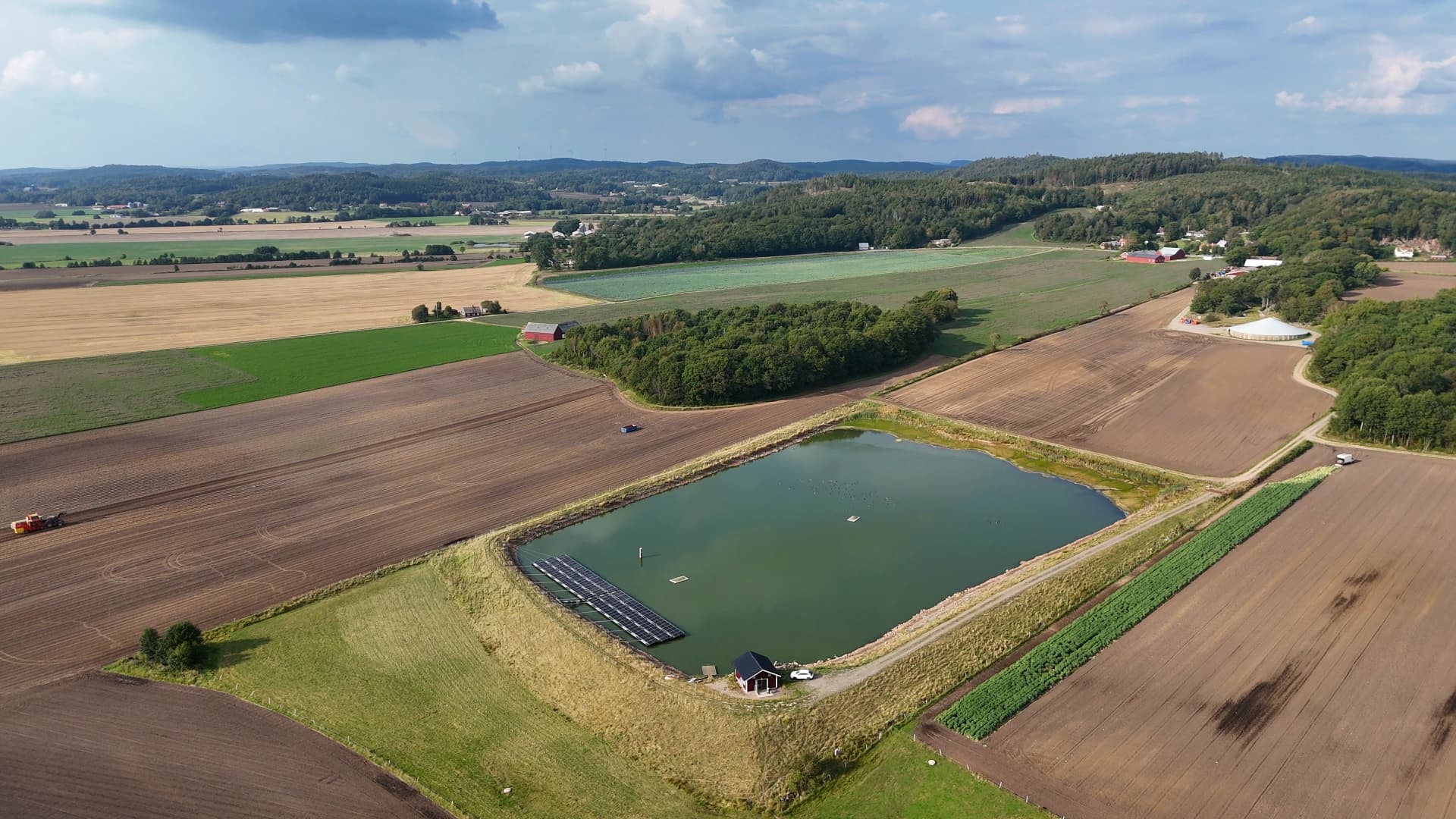
Our installations produce clean energy without competing for land — working with water and nature, not against them.
Four core focus areas
We work to keep our impact on the environment and the natural world to a minimum, and to make sure we're accountable for the long term across the business. Four core focus areas guide that work.
Climate and emissions
01Sunsurf Solar displaces fossil energy with clean electricity, lifts energy efficiency, and brings down CO₂ footprint.
Ecosystems and biodiversity
02Our systems are designed to sit comfortably in aquatic environments — they reduce heat radiation, curb algal blooms and protect habitats.
Technology development
03Our products are built to last for decades, need minimal maintenance, and be recycled at end of life. Materials come from ISO-certified suppliers within the EU.
Long-term thinking and circularity
04The business model is built on long-term economic and ecological sustainability. Circularity is built in — every solution is designed for reuse and recycling at end of life.
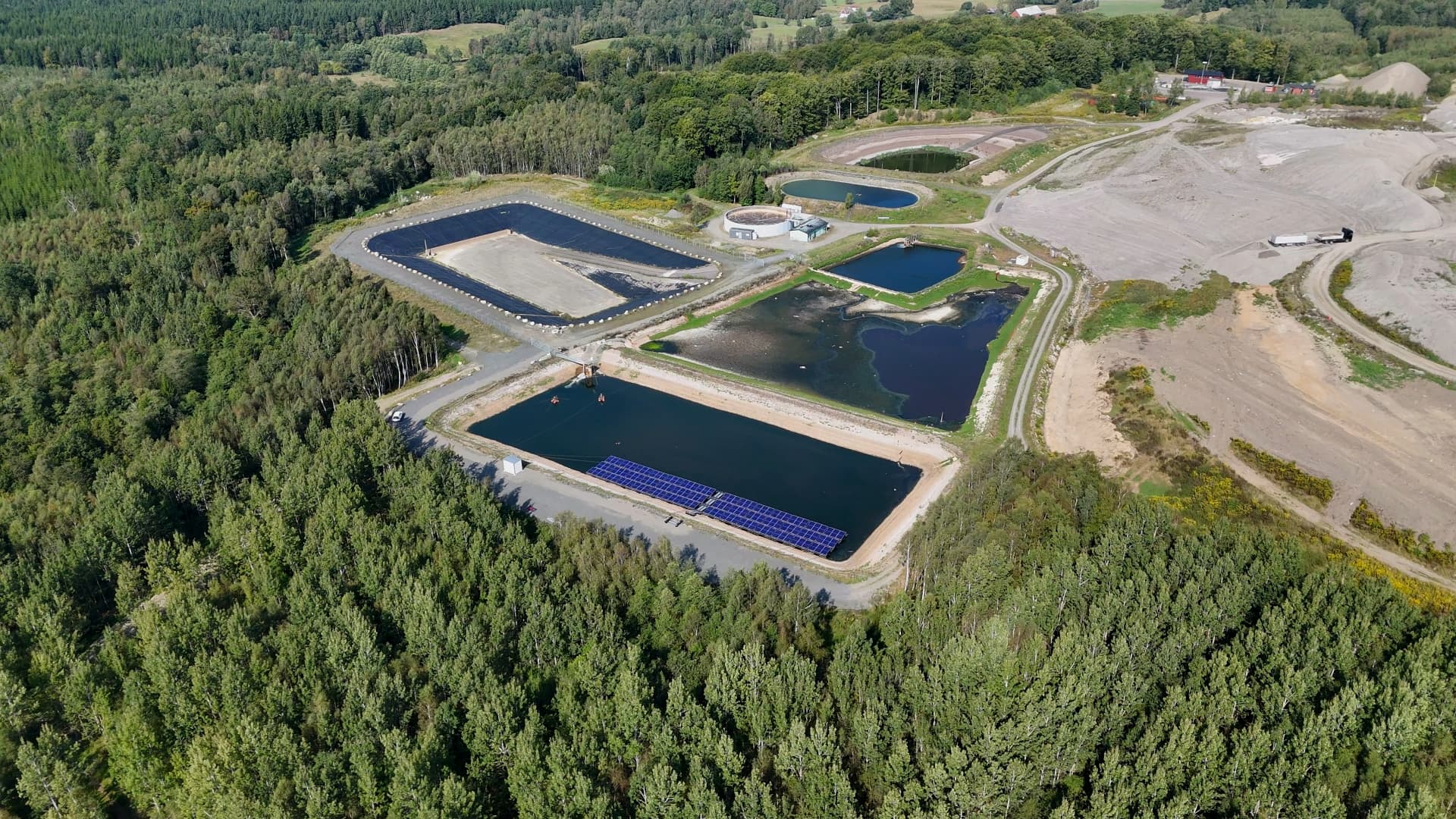
Climate and emissions
A floating solar installation delivers real gains in energy and resource efficiency. A typical Sunsurf installation of 100 kWp avoids around 16 tonnes of CO₂-equivalents a year and saves about 152 m³ of water through reduced evaporation. Sweden's largest floating solar park (116.1 kWp at Jönköping, 2025) avoids around 21 tonnes of CO₂ and saves 155 m³ of water a year.
The cooling effect of the water below also lifts panel efficiency by up to 15% compared with ground-mounted systems — so floating solar produces more energy per installed kWp than equivalent land-based installations.
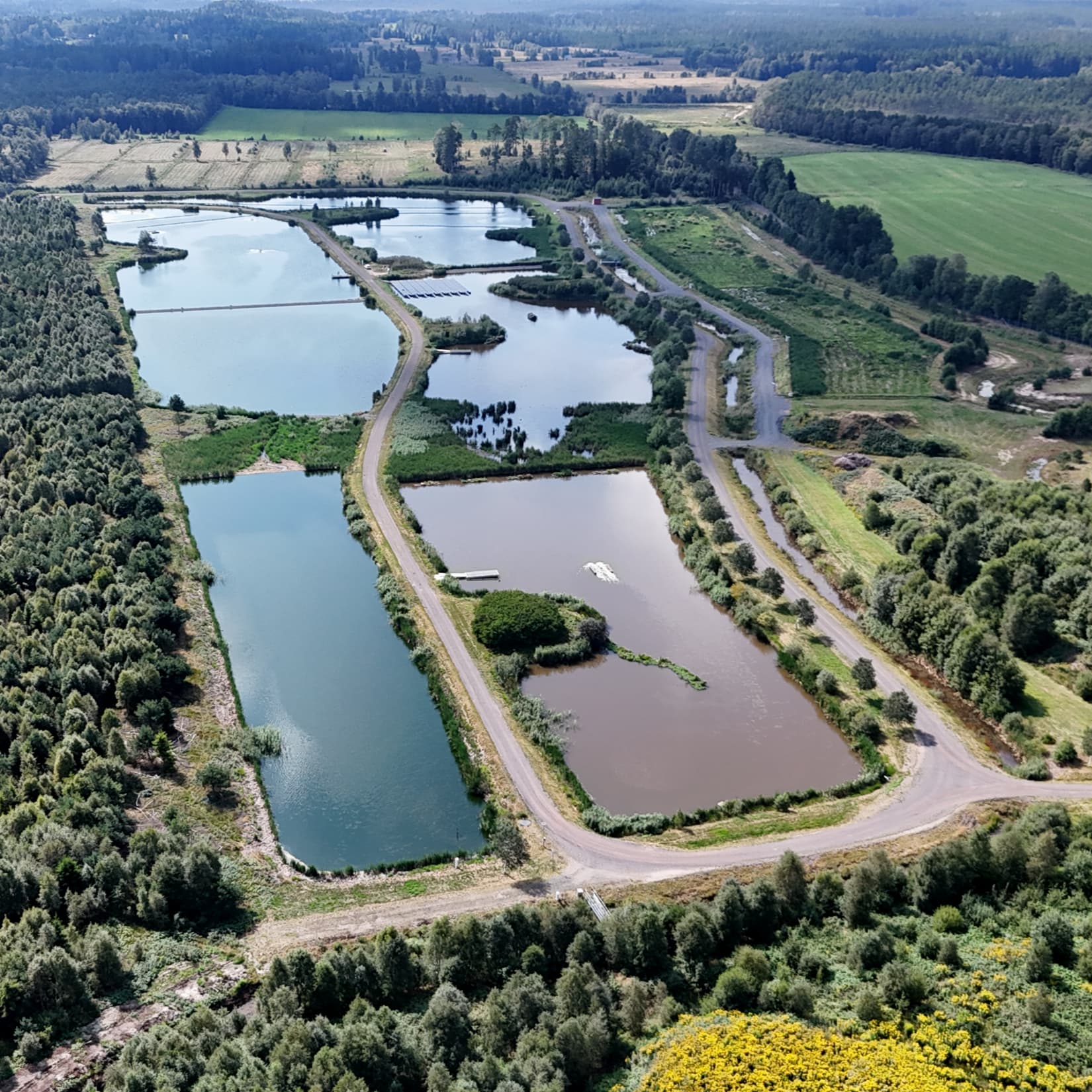
Ecosystems and biodiversity
Floating solar has measurable benefits for ecosystems and biodiversity. The patented anchoring system keeps water turbidity to a minimum, preserves water quality and protects biodiversity.
Siting the panels on water also keeps them out of the landscape's sightlines. For agriculture, reduced evaporation and the ability to pair with irrigation systems give farmers a more resource-efficient setup.
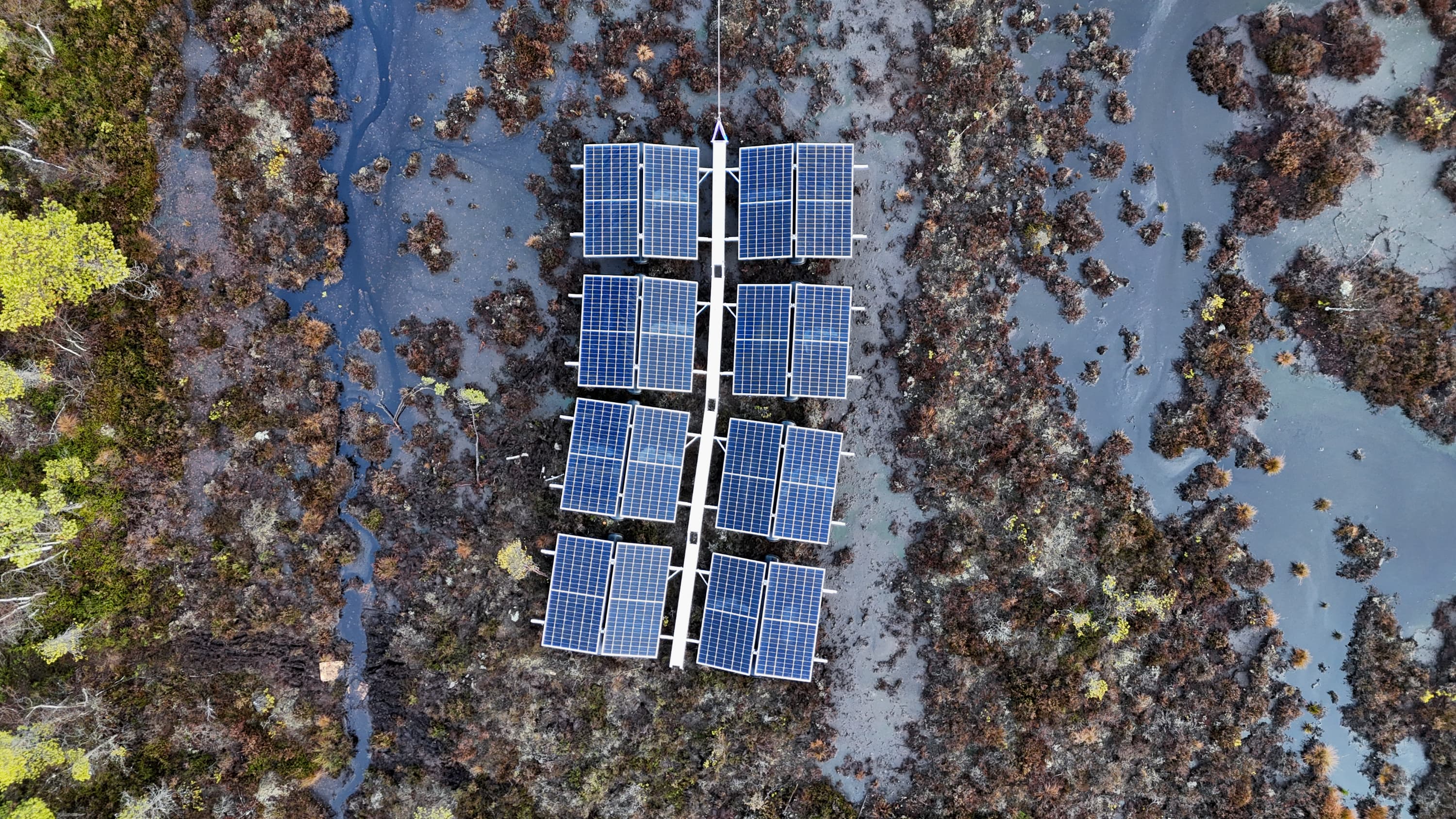
Technology development — design and suppliers
Our floating solar arrays are designed to work with aquatic environments and to maximise both economic and ecological benefits. They're built from durable, corrosion-resistant materials — aluminium, coated steel and high-density polyethylene (HDPE) — for a long service life and low maintenance.
Components are made by ISO 9000- and ISO 14000-certified suppliers, guaranteeing high quality and environmental discipline. The aluminium is sourced from Nordic raw materials and processed in Sweden, the steel is coated to handle aggressive environments, and the pontoons are made from recycled material.
Solar — power for the long run
Solar is one of the most sustainable forms of energy on hand — natural, silent and emission-free in operation. It's a reliable answer to tomorrow's electricity needs and an investment in both the climate and the bottom line. Unlike fossil fuels, which depend on damaging extraction and drive climate change, solar is available directly from nature, year-round.
With modern technology — solar cells and panels — we can turn sunlight into useful electricity wherever we are. Even in Sweden the conditions are good, particularly through the summer months. Solar power has a very low climate footprint across its full life cycle, with no fuel and no long-distance transport needed to generate.
Lifecycle and climate impact
Solar panels are a climate-smart energy choice — they produce electricity with no emissions throughout their operating life. The largest part of solar's climate footprint sits upstream, in raw-material extraction, energy-intensive manufacturing and transport. Even so, solar remains one of the lowest-impact forms of energy available across its full life cycle. The average panel pays back its energy debt within roughly three years (source: IEA PVPS Task 12, 2021). Our panels are guaranteed to retain at least 80% of rated output after 25 years, and the mounting system has a 40-year technical service life.
The technology is moving fast. Manufacturing is becoming more energy efficient, material use is falling, and recycling is steadily improving. At the same time, the share of fossil-based electricity in manufacturing countries is dropping — and the overall climate footprint of solar comes down each year.
Sunsurf Solar and Agenda 2030
Our sustainability strategy is built around making a positive contribution to the UN's Sustainable Development Goals. Our solar solutions produce clean energy with care for both people and the natural world.
Goal 7: Affordable and Clean Energy
01We raise the share of clean energy without putting pressure on productive land.
Goal 9: Industry, Innovation and Infrastructure
02We develop innovative energy infrastructure that strengthens the resilience of tomorrow's energy systems.
Goal 13: Climate Action
03We cut CO₂ emissions with high-efficiency clean energy.
Goal 15: Life on Land
04Our solutions keep land in place and contribute to healthier aquatic environments.
What does the permitting process look like?
Floating solar in Sweden typically requires water-activity approval and consultation with the County Administrative Board — though usually no building permit. We guide you through the whole process, from first municipal contact to a commissioned plant.
About us